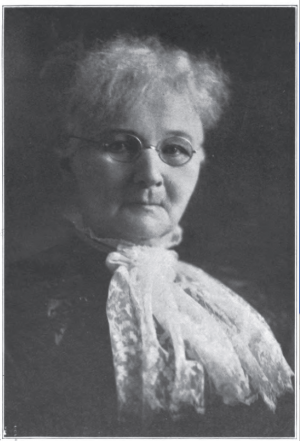
“The capitalists say there is no need of labor organizing but the fact that they themselves are continually organizing shows their real beliefs.”
Mother Jones, Greensboro, NC, 1906
“The capitalists say there is no need of labor organizing but the fact that they themselves are continually organizing shows their real beliefs.”
Mother Jones, Greensboro, NC, 1906
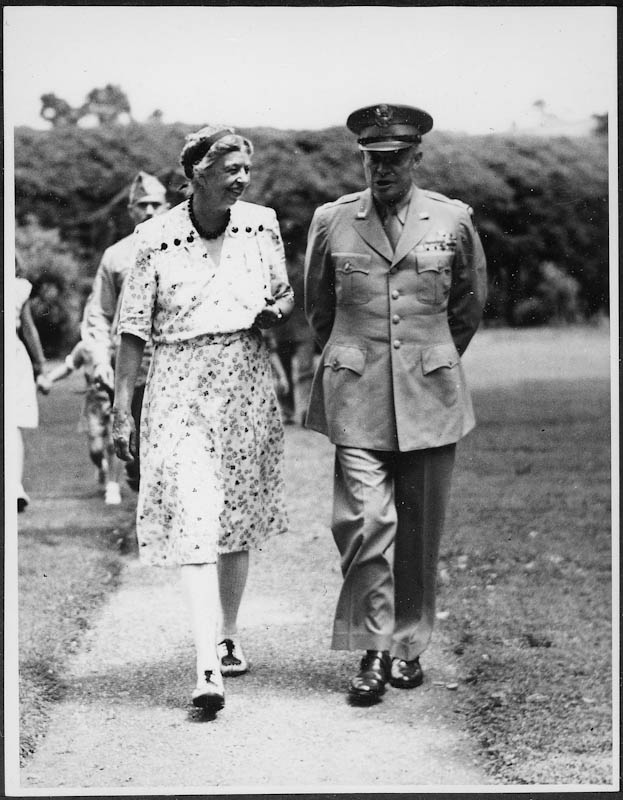
I am opposed to ‘right to work’ legislation because it does nothing for working people, but instead gives employers the right to exploit labor.
Eleanor Roosevelt quoted in American Federationist, 1959
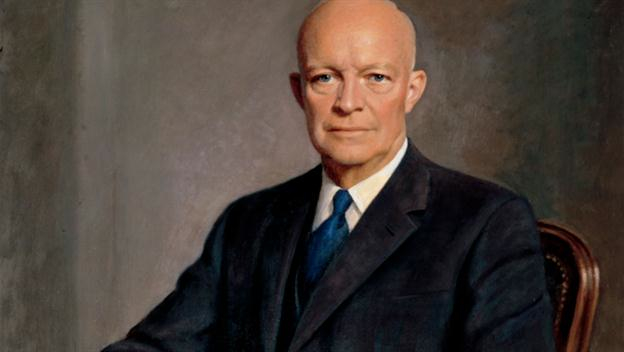
“I have no use for those — regardless of their political party — who hold some foolish dream of spinning the clock back to days when unorganized labor was a huddled, almost helpless mass.”
Dwight Eisenhower, Speech to the American Federation of Labor, New York City, September 17, 1952

[U]nion recognition meant the real beginning. Union meant strength, and recognition meant the employer’s acknowledgment of that strength, and the two meant the opportunity to fight again for further gains with united and multiplied power. As contract followed contract, the pay envelope fattened and fringe benefits and job rights grew to the mature work standards of today. All of these started with winning first union recognition.
Speech given to the shop stewards of Local 815, Teamsters, and the Allied Trades Council, New York City, May 2, 1967

If you believe that discipline will result from a meeting with management/administration (in legalese, “an investigatory interview”), you can insist that a union representative be present during this interview. This is part of your “Weingarten Rights,” which references the 1975 United States Supreme Court case NLRB vs. Weingarten. Weingarten Rights apply only to members of a collective bargaining unit and are among the many benefits of having a union.
When an investigatory interview occurs, the following rules apply:
Rule 1) – You must make a clear request for effective union representation before or during the interview. Often an employee may not know at the outset that a meeting with management could lead to discipline. If such a meeting is or becomes an “investigatory interview,” you should assert your right to have a union officer of your choosing present. You cannot be punished for making this request. (Note: If the union representative of your choice is not available in a reasonable time period, it may be necessary for an alternative union officer to represent you.)
A typical Weingarten request would be: “If this discussion could in any way lead to my being disciplined or terminated, or affect my personal working conditions, I respectfully request that my union representative be present at this meeting. Until my union representative arrives, I choose not to participate in this discussion.” Or you may simply say, “I want my union representative here.”
Rule 2) – After you make this request, the interviewer has three options:
Rule 3) – If the interviewer denies your request and continues to ask questions, this is an unfair labor practice. You have the right not to answer any questions until you have union representation. You cannot be disciplined for refusing to answer the questions, but you are required to sit there until the supervisor terminates the interview. Leaving before this happens may constitute punishable insubordination in some cases.
The AAUP-UC represents all members of the bargaining unit, both those who pay dues and those who do not, and is obligated to come to your aid without prejudice. If you are summoned to a meeting with a member of administration and discover that it is an “investigatory interview,” assert your right to have a union representative present.
“The labor movement was the principal force that transformed misery and despair into hope and progress. Out of its bold struggles, economic and social reform gave birth to unemployment insurance, old-age pensions, government relief for the destitute and, above all, new wage levels that meant not mere survival but a tolerable life.
The captains of industry did not lead this transformation; they resisted it until they were overcome. When in the thirties the wave of union organization crested over the nation, it carried to secure shores not only itself but the whole society.”
– Martin Luther King, Jr. Speech to the state convention of the Illinois AFL-CIO, Oct. 7, 1965

For All AAUP-UC Bargaining Unit Members:
Please be sure to fill out the AAUP-UC survey by Sunday, February 15, 2015. This survey about your working conditions and contract issues is important for negotiations and addressing your concerns.
If you did not receive the survey via email on February 4th, or if you have questions about the survey, please contact Paul J. MacArthur.
“History is a great teacher. Now everyone knows that the labor movement did not diminish the strength of the nation, but enlarged it. By raising the living standards of millions, labor miraculously created a market for industry and lifted the whole nation to undreamed of levels of production. Those who today attack labor forget these simple truths, but history remembers them.”
– Martin Luther King, Jr. Address at the AFL-CIO Fourth Constitutional Convention, December 11, 1961
For All AAUP-UC Bargaining Unit Members:
Please be sure to fill out the AAUP-UC survey by Sunday, February 15, 2015. This survey about your working conditions and contract issues is important for negotiations and addressing your concerns.
If you did not receive the survey via email on February 4th, or if you have questions about the survey, please contact Paul J. MacArthur.
“In our glorious fight for civil rights, we must guard against being fooled by false slogans, such as ‘right to work.’ It is a law to rob us of our civil rights and job rights. It is supported by Southern segregationists who are trying to keep us from achieving our civil rights and our right of equal job opportunity. Its purpose is to destroy labor unions and the freedom of collective bargaining by which unions have improved wages and working conditions of everyone.Wherever these laws have been passed, wages are lower, job opportunities are fewer and there are no civil rights. We do not intend to let them do this to us. We demand this fraud be stopped. Our weapon is our vote.”
Martin Luther King Jr. speaking on right-to-work laws in 1961.
 AAUP Utica